
- The Power Pit
- An Interview with Karl Wendlinger
An Interview with Karl Wendlinger
Who drove in Mercedes’ junior team and spent nineteen days in a coma after a serious Formula 1 accident. By Frank Schwaibold
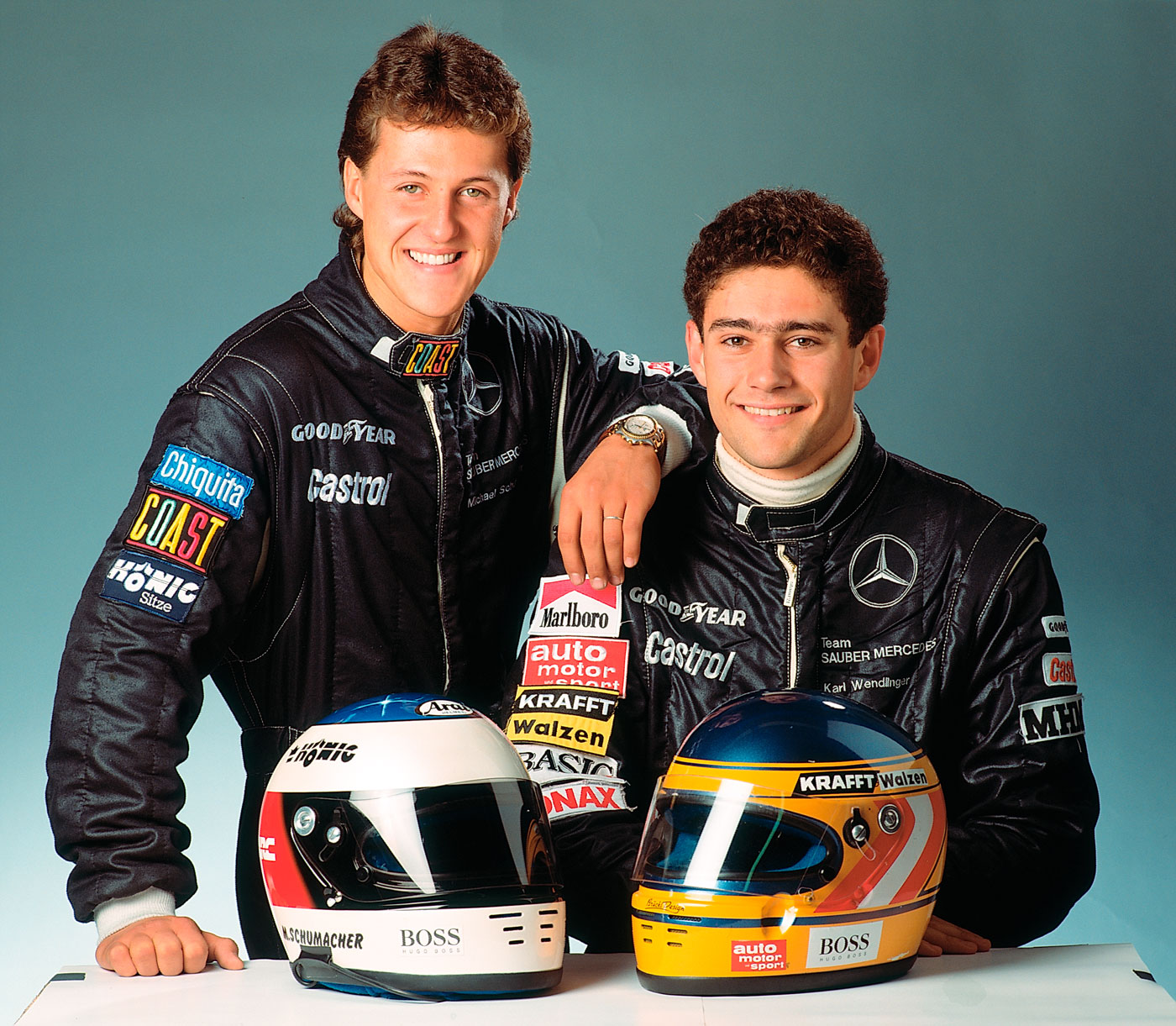
He became German Formula 3 Champion in 1989, ahead of Heinz-Harald Frentzen and Michael Schumacher.
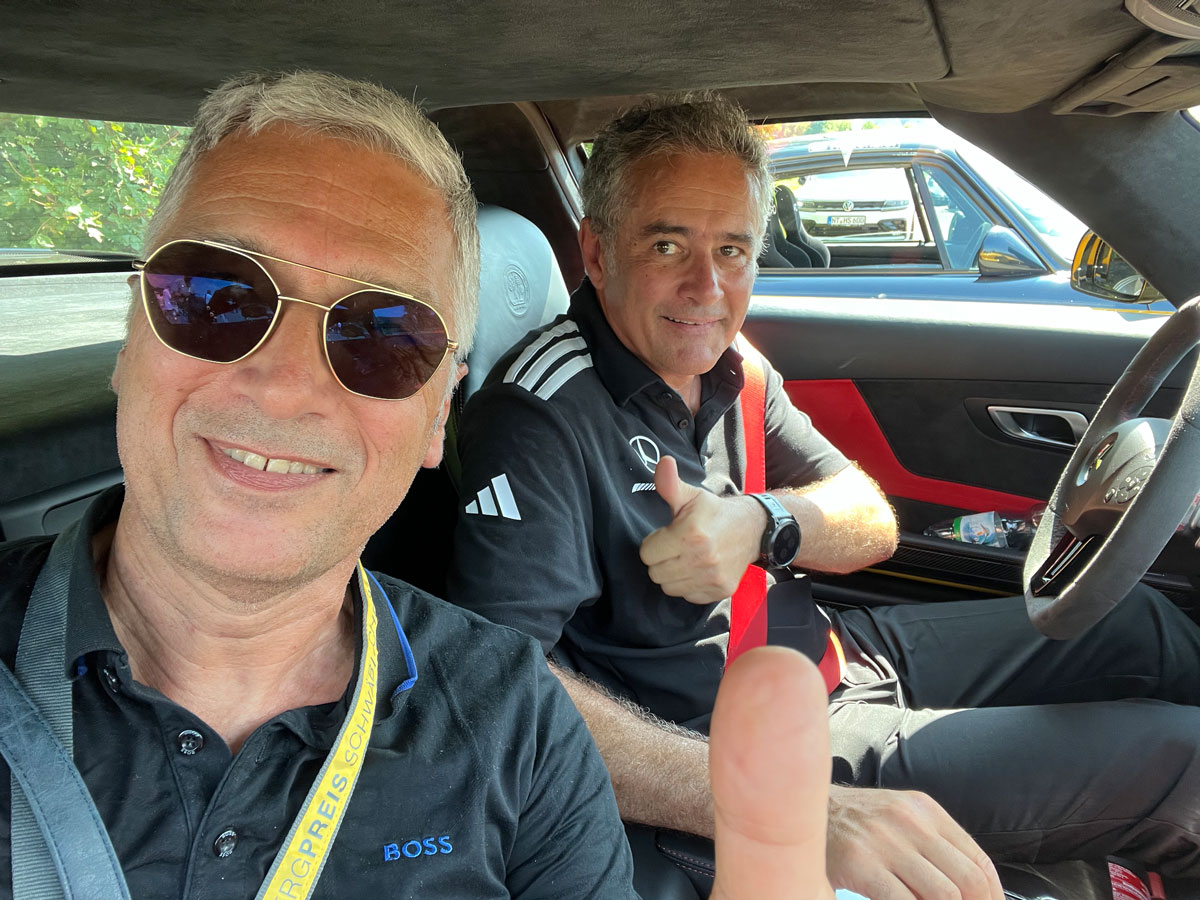
He was then recruited into the Mercedes junior team alongside the two Germans. But a terrible accident prevented Karl Wendlinger from achieving the ultimate career. After a crash during practice in Monaco, he spent 19 days in a coma. Nevertheless, he fought his way back into motorsport. Today, the Austrian is a brand ambassador for AMG and still gets behind the wheel with undiminished passion. We had the privilege of racing up the Neuffener Steige with him in the Mercedes SLS AMG GT3 with 585 hp under the hood, reviewing the key milestones of his career.
Before Wendlinger starts the engine, we begin the interview. He clearly enjoys thinking
back to his youth.
How did you get into racing?
Through my father. He ran a car dealership with a repair shop and raced cars for many years. I was always there as a kid and the sport fascinated me very quickly. I started karting. Back then, you weren’t allowed to do that until you were 14. In the first year it was only five races, but in the second year I was already racing entire championships. At 18, Formula Ford 1600 came along.
You were also in the Mercedes junior team together with Michael Schumacher and Heinz-Harald Frentzen. What was Michael Schumacher like?
On one hand very approachable, likeable and friendly, on the other hand very focused. Even back then he showed his ability and class. I quickly saw that he was a great talent. But we also had a lot of fun together during test drives. At the hotel, for example, we played billiards or cards. It was a good connection.
The C9 and later the C11 were magnificent race cars that were in no way inferior to Formula 1 in terms of cornering speed. It took me a bit longer to compensate for the enormous difference from Formula 3. But after a short time I was on equal footing with the two of them.
Wendlinger takes his seat in the cockpit. The interviewer sits in the passenger seat. The topic of Schumi isn’t finished yet.
Was Michael Schumacher more of a teammate or a competitor for you?
Both. During the day he was a competitor, in the evening he was a teammate. During the day you always had to watch
: What were the others’ lap times? Everything came easily to Heinz-Harald. Michael
was extremely talented and approached everything very systematically. He showed up to the second fitness test completely ripped and was a muscle-bound powerhouse. From the start he also talked a lot with the engineers, wanted to know everything. I, on the other hand, was more the quiet type.
What memories do you have of Stuttgart from your Mercedes days?
We flew to Stuttgart for our first test drive in the Sauber Coupé in November 1989 and were at Stars and Cars, the famous Mercedes Motorsport closing ceremony, where we were introduced. But there are other connections to Württemberg as well. I know that races used to be held at the Schwäbische Alb hill climb and for several years now there’s been a classic event that attracts tens of thousands of spectators. If AMG participates, I’ll drive next year. This year I already came for a test drive in the run-up to the hill climb.
Wendlinger revs up the 585-hp engine of the SLS AMG GT3, the next curve keeps getting closer. The journalist in the passenger seat thinks, why isn’t he braking yet, but Wendlinger stays full on the gas pedal and races the car up the mountain. No time now to continue the conversation; only at the hairpin turn on the plateau at the Hülbener Brille does the Q&A resume with the most difficult topic.
The Formula 1 race in Monaco completely changed your life because of your serious accident. What memories do you have of that race?
None at all. Back then the first practice day was Thursday and Friday was a rest day. The last thing I remember is going to bed on Wednesday evening. Wednesday afternoon I went for a jog with our fitness trainer and Heinz-Harald Frentzen, and then I went to bed in the evening. Otherwise I don’t remember anything. I think it’s a kind of self-protection by the body. I can’t remember the accident on Thursday.
I slammed into a container sideways at more than 170 km/h and hit my head against it. 19 days later they brought me out of the artificial coma in Nice. But I can’t remember that either. Only a morning in the Innsbruck hospital when they explained to me what had happened. Then there was a comeback.
How do you come back after such a serious injury, where you’re in a coma for weeks?
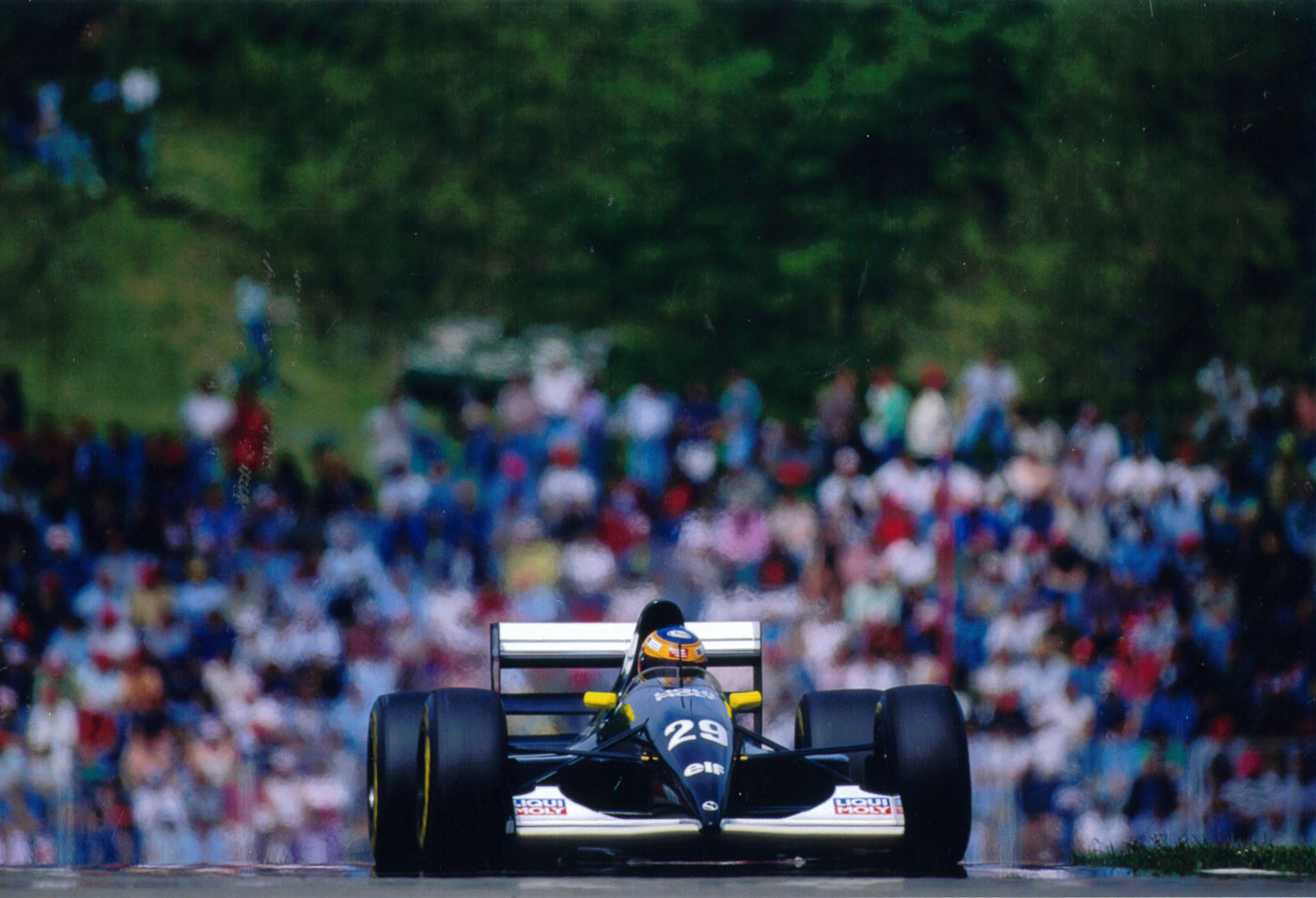
I made good progress quickly in therapy and was driven by the thought: I want to get out of the hospital as fast as possible and get back in a race car. Then I got the chance from the Sauber team to do that. That was anything but a given. But I couldn’t assess it properly. It was much too early, the recovery time should have been longer. Not because of any pain or my health condition, but to be mentally strong again, as strong as you need to be to push a Formula 1 car to the limit. At the test in Le Castellet I was two and a half seconds slower than my teammate Heinz-Harald Frentzen. That was obviously way too much. I couldn’t concentrate like that, couldn’t deliver the performance anymore and was then logically replaced after four races.
So the mental aspect was decisive?
Yes. At the beginning of December 1994 during test drives in Barcelona I was very good. Then I got the contract at Sauber. Two months later were the first test drives in the cockpit of the ’95 car, and then it was much worse. The doctors said the injury was so severe that you should be glad everything is fine again in your daily life. But under extreme stress you’ll now have ups and downs. During the test drives in February 1995 I simply couldn’t concentrate anymore.
We’re back at the start, and on the way down Wendlinger also showed how coolly he steers the car safely through the curves despite high speed. Time for the final question:
You’ve actually driven everything: Formula 3, Formula 1, DTM, endurance and hill climb racing. What’s the hardest to drive?
Formula 1 challenged me the most. In terms of top speed, a Le Mans car is just as fast as a
Formula 1 car. But in terms of cornering speeds and G-forces, Formula 1 is the ultimate benchmark. And you’re constantly in the spotlight and have to deliver top performance. The pressure is simply enormously high.
The Formula 1 scene is something very special.