
- The Power Pit
- 1972 – The Birth of a Beast
1972 – The Birth of a Beast
There are cars that drive. And there are cars that tell stories. The De Tomaso Pantera clearly belongs to the second category – loud, raw, unreasonable – exactly the way a real man’s car has to be.
In the early ’70s, somewhere between American big-displacement madness and Italian design elegance, Alejandro de Tomaso had an idea that still resonates today: why not combine the best of both worlds? The result was a wedge on wheels, penned by Tom Tjaarda at Ghia – low, wide, aggressive – and powered by an honest, unpolished Ford Cleveland V8. Not a delicate, high-revving Italian engine. But a real muscle car in a tailored suit. For many back then, a provocation. For others, a dream. And for a select few: the start of a lifelong relationship.
50 years of loyalty – and a bit of madness
This example has lived exactly that. More than 50 years with one owner – that’s not a period of ownership, that’s a marriage. With all its highs and lows. Because the original V8 was anything but boring. When it ran, the world was fine. When it didn’t, nothing was. After a few engine failures, even the most loyal enthusiast eventually had enough of that kind of thrill ride. The decision wasn’t easy, but it was consistent: the Pantera had to be rethought.
Spaghetti meets sauerkraut
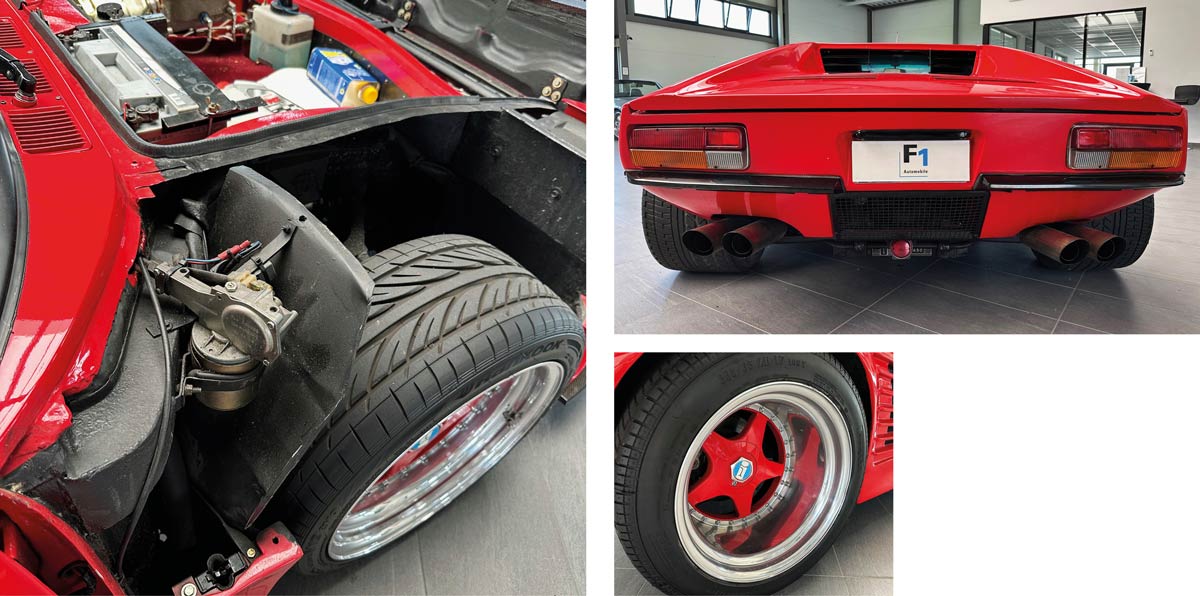
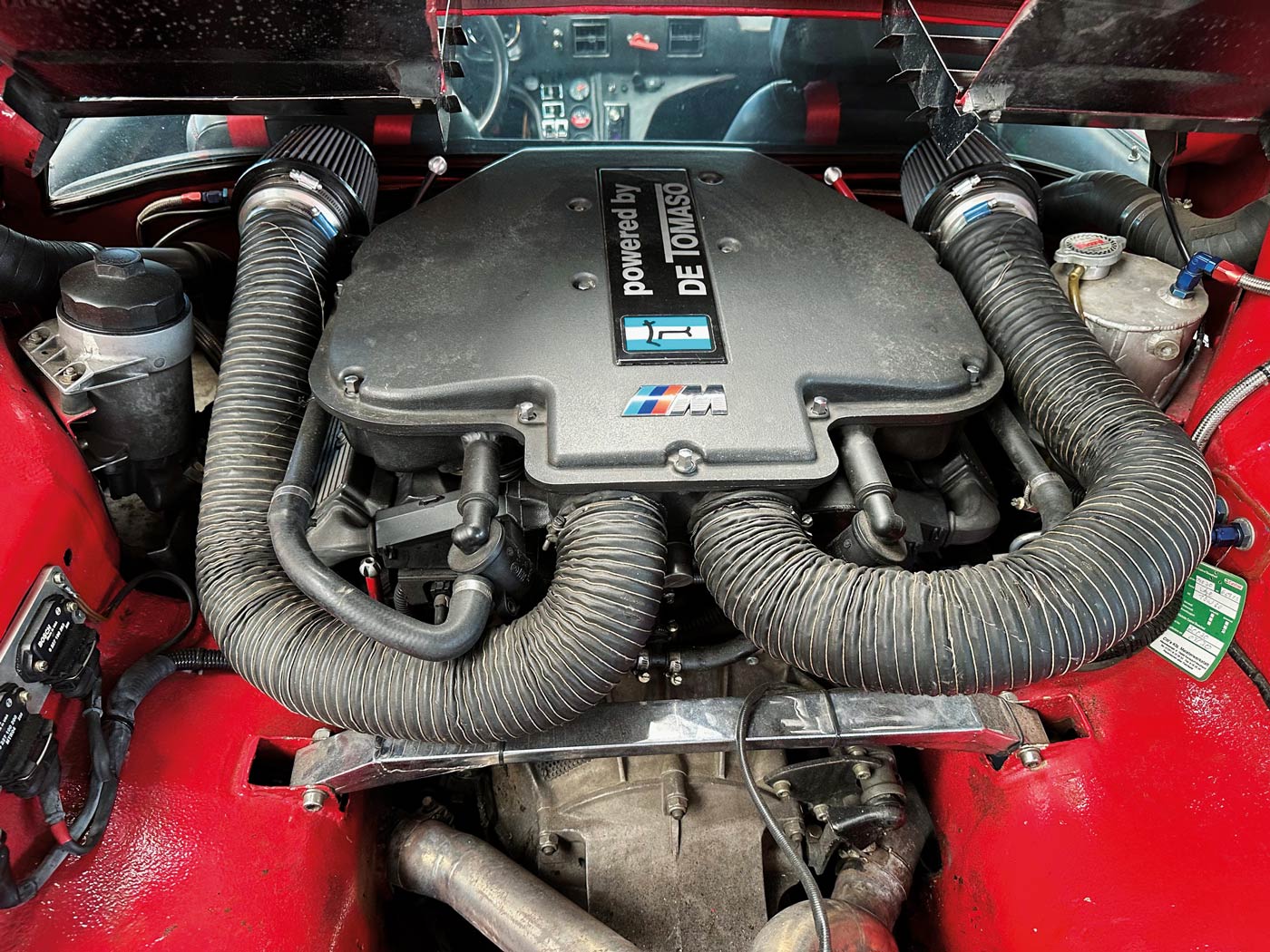
The conversion wasn’t a quick fix, but a project with ambition. The new heart comes from a BMW M5 – a modern V8, precise, eager to rev, brutally efficient. The complete engine-and-gearbox unit was installed, built and adapted by a motorsport specialist who knew what he was doing. The engine got the full program: a racing ignition system, a custom-tuned exhaust with four 100-cell catalytic converters, plus a transmission calibration that finally does the performance justice. Officially, it’s quoted at around 400 hp – but anyone who knows M engineering understands: that figure is more polite than accurate.
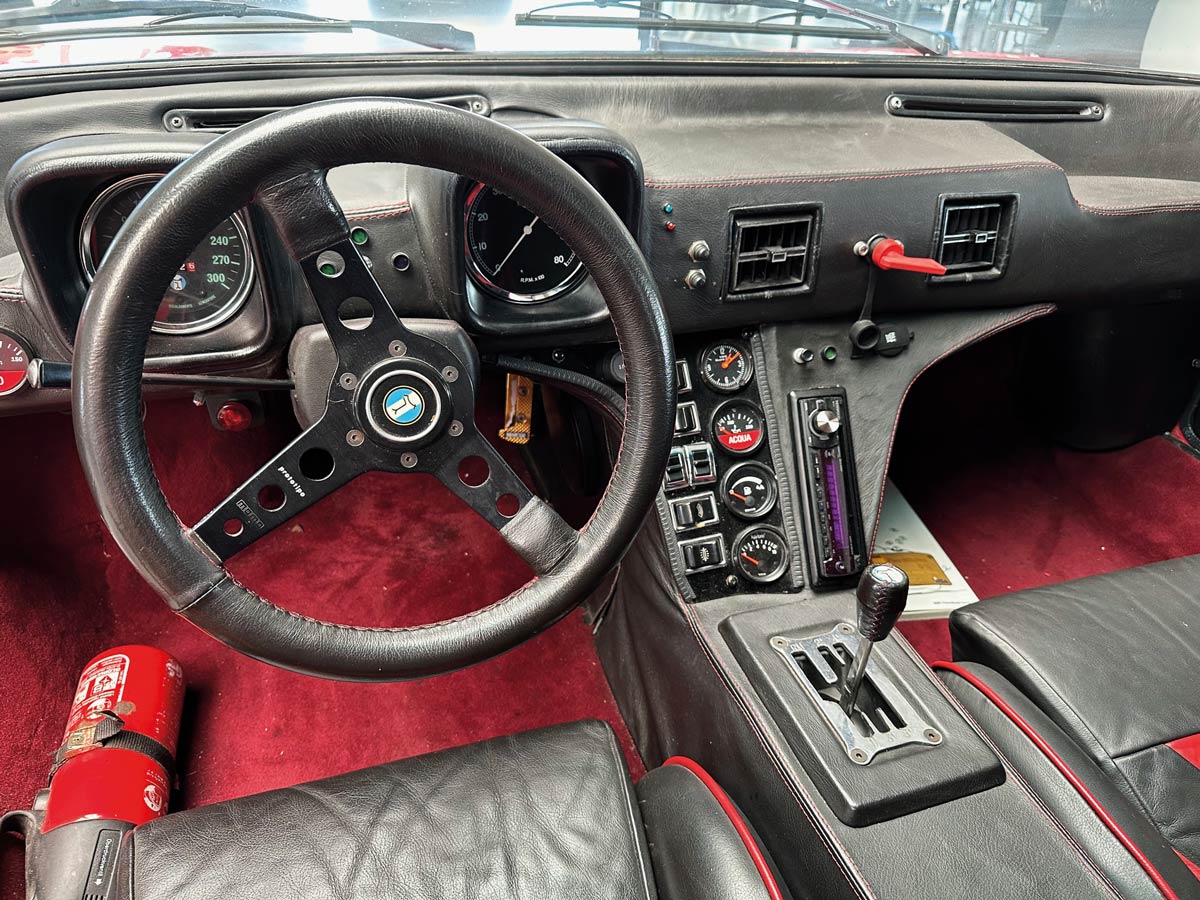
This is never just about engineering or perfection in the details— it’s about that hard-to-pin-down feeling when a car suddenly tells more than its spec sheet.
And then there’s this wonderfully absurd detail that captures the car’s character perfectly: in the vehicle documents, under code U.1 04, it essentially lists the “phone number” of this device. And in the fine print, a small “+100” appears. No further comment is really needed on the subject of sound.
A body, reimagined
The bodywork wasn’t left untouched either. The hood and sills were rebuilt in carbon – lighter, sharper, more uncompromising. The fenders, on the other hand, were deliberately kept in steel, as a nod to the original. Once all the work was finished, the car received an elaborate paint job that makes it look not like a conversion, but like an evolution.
Under the surface, it continues just as consistently. A dual-tank system combined with
an additional catch tank ensures the engine always gets what it needs – no matter how hard it’s pushed. This isn’t a gimmick; it’s motorsport DNA.
When it fires up, nobody stays cool
And then comes the moment the key is turned. No digital wake-up, no quiet whirring. Instead, a start that fills the room. That lingers. That demands respect. Even Mr. Foster of F1 Automobile, someone who has worked with exotics and high-performance sports cars for almost three decades, puts it perfectly: “No one keeps a straight face when it starts.” And when someone with that kind of experience says it, it’s not just a throwaway line.
A car that knows no compromises
This Pantera is no longer a classic in the classic sense. It’s not a restomod for purists either. It’s something of its own. A mix of past and present, Italian passion and German precision, character and conviction. A car that carries 50 years of history – and is now more ready than ever to write new chapters. If you want to feel that, don’t think too long and make your way to F1 Automobile. And whether it suits you? That becomes clear in the one moment you press the start button – and can’t stop grinning.
www.f1-automobile.de